AI Styling Studio — Infinite avatar looks from just 1 photo.Try it now.

Advertise here →

AI NewsCheaper, faster, and culturally aware, Avataar’s video AI is built for India’s scale

Cheaper, faster, and culturally aware, Avataar’s video AI is built for India’s scale

11:37 AM IST · June 12, 2026

Cheaper, faster, and culturally aware, Avataar’s video AI is built for India’s scale

India’s AI model output has been slow compared to the U.S., Europe, and China. Only a few startups are releasing models, and most of them are large language models or voice models. To encourage more development, the government launched theIndia AI Mission, a roughly $1.2 billion initiative that — among other things — gives selected startups access to subsidized GPU compute in exchange for releasing their models publicly. One of the 12 startups selected for the program,Avataar AI, has launched a new video model called Varya that is built to understand local context — such as identifying different festivals, food, and clothing. The Peak XV-backed startup, which focuses oncreating video tools for e-commerce, didn’t build Varya from scratch. It started with Wan 2.2, a publicly available video generation model released by Alibaba, and used a technique called distillation — essentially compressing the model’s capabilities into a leaner, faster version optimized for Avataar’s specific use cases. The result is a model that runs in four steps rather than Wan 2.2’s 50, producing video 10 times faster and at a fraction of the cost. To put that in concrete terms: using an NVIDIA H200 GPU, Varya can generate a 5-second 720p clip in 45 seconds, compared to 1,230 seconds for Wan 2.2. The most striking aspect of Varya may be its price. The company plans to charge ₹0.48 ($0.005) per second of video on its hosted service — far cheaper than models like Veo, Kling, Luma, and Runway, which typically charge $0.10 or more per second. That’s a roughly 20x price difference. “India is a video-first market. We see this across every large consumer internet product in India: video wins over text. Current AI video models are too expensive for population-scale use in India. If video AI is going to reach students, teachers, MSMEs, creators, enterprises, and public services, costs have to come down dramatically. Cost is the biggest unlock for AI adoption in India,” Peak XV’s managing director Rajan Anandan told TechCrunch. Image and video generation models often miss cultural nuances and produce stereotyped or generic outputs — a problem TechCrunch hasreported on before. Avataar AI says it has used curated data to train Varya to recognize cultural nuances including food, clothing, architecture, and festivals. Varya will be released as an open-weight model onIndia’s AI Kosh portal— the Indian government’s centralized repository for publicly available AI models and datasets — along with its training data, meaning developers can self-host or modify it for their own needs. Avataar also plans to make the model available to its enterprise customers and says it is open to partnerships with video tools including Higgsfield and Adobe Firefly. Anyone can try it now on its website using text prompts or reference images. Varya’s launch reflects a fundamental tradeoff in India’s AI ambitions. Industry veterans have noted that India can make its mark in AI bycreating applicationsand a robustdeveloper ecosystemrather than competing on foundation models. And there’s a reason for that pragmatism: model development has been slower in India than in global rivals due to alack of computeand limited quality data availability. The India AI Mission is also part of a broader government push to close that gap. Last year, it selected 12 startups — Avataar AI among them — to develop AI models and provided them with cost-efficient compute. Earlier this year, IT minister Ashwini Vaishnaw said India aims to attract$200 billionin AI investment by 2028 and more thandoubleits GPU capacity within six months.

read more

Latest AI News

View All News →
Pixi’s new iOS app turns text messages into interactive AR experiences

Pixi’s new iOS app turns text messages into interactive AR experiences

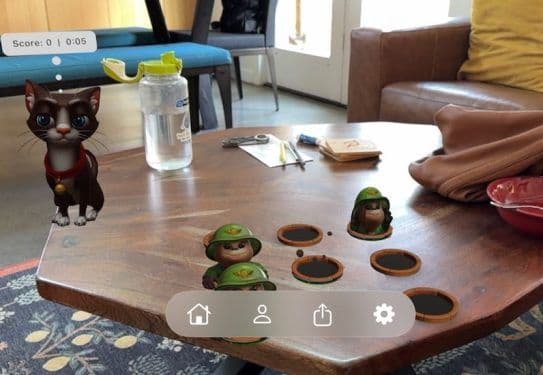
Forget stickers, GIFs, and emoji reactions.Pixiis betting that the next evolution of messaging is interactive augmented reality (AR). The startup launched its messaging-native app on theApp Storeon Wednesday, allowing users to send AI-powered AR characters through iMessage. Instead of appearing as static media, the characters come to life through the recipient’s iPhone camera, where they can react to their surroundings, interact with people, and respond in real time. While AR isn’t new and shiny anymore—companies likeSnaphave created AR filters and lenses for years—Pixi believes its approach is different. By combining AR with on-device AI, its characters can understand what’s happening around them and behave accordingly. A virtual cat, for example, reacts when a real dog walks past. (According to the company, all visual and audio processing remains on the device to preserve user privacy.) Pixi founder Mark Drummond (ex-DreamWorks Animation and ex-Apple) says the app is designed to bring a greater sense of presence and spontaneity to digital conversations. Rather than sending a text to wish someone a Happy Birthday, users can send characters that create a shared experience, turning a simple message into something closer to a digital gift or playful interaction. “The consumer problem we’re solving is thinking of a friend when they’re not present,” he told TechCrunch. “Sometimes the psychology is called pebbling or creative gifting. You’re sharing tokens of affection, basically cards, e-cards, and gifts. That’s your dad, or, in some cases, your granddad’s media. We can do better. We can do something that’s digitally native, and that uses everything we learned about AR on the iPhone.” Earlier this week, Drummond demonstrated the app for us, selecting the cat character, which performed a series of stand-up jokes on his desk. Notably, the cat appeared to respond to Drummond’s facial expressions. For instance, the experience concluded when he smiled, showcasing the character’s ability to perceive emotional cues. At launch, users will have access to a robot, a cat, and an animated envelope character that can react to their voice and “attack” their friends in a playful way. If they move, the envelope will chase them. There are also games like tic-tac-toe and whack-a-mole. Pixi plans to expand beyond just a few characters. The goal is to create a marketplace where studios, brands, and independent creators can share their unique characters for users to choose from. The company envisions this being used for events like movie premieres or product launches, allowing characters to generate excitement, such as when M&Ms release a new flavor. Drummond also mentioned introducing Alice in Wonderland as a character option, as she is an open intellectual property. He pointed out that “our Alice character needs to react to objects that she sees on your desktop in an ‘Alice-consistent’ way,” to demonstrate to partners how their creations will interact with the technology. In the future, Pixi hopes to allow users to create their own characters and personalities. “Part of our plan is to open up those generative AI capabilities to our [users], so they can prompt their way to say something, like, ‘I want a blue blob that threatens my friend and growls at them and keeps chasing them on the phone,’” Drummond explained. To send a character to your friend, download the app on iOS and use iMessage by tapping the plus sign button in the lower left corner. No installation is required to receive a Pixi message. Initially, the app will be available only for iPhone models 11 and newer, but there are plans to expand to Android devices and messaging platforms like WhatsApp and Instagram in the future. Also, while the app is free for users, brands will have the option to charge for their characters if they choose. “We’re going to encourage people to do it for free, because then people become your own brand ambassadors. You’re putting them in charge of using your characters to tell their own stories,” Drummond said.

2 hours ago

View

Inside Indian Hospitals' Multi-Billion Dollar AI Pivot

Inside Indian Hospitals' Multi-Billion Dollar AI Pivot

Hospitals across India are integrating AI into clinical and administrative workflows, but adoption remains uneven.

2 hours ago

View

Pramaana Labs Raises $27 Million in Seed Round Led by Khosla Ventures

Pramaana Labs Raises $27 Million in Seed Round Led by Khosla Ventures

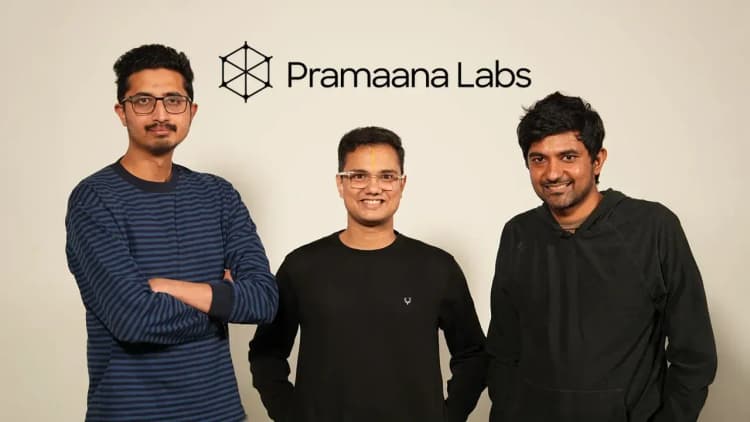
Pramaana Labs has raised $27 million in a seed round led by Khosla Ventures to build AI verification systems for regulated industries.

2 hours ago

View

Niqo Robotics To Represent India at Bharat Innovates 2026 in France

Niqo Robotics To Represent India at Bharat Innovates 2026 in France

Indian agricultural robotics firm Niqo Robotics has been selected to represent India at the government’s flagship deep-tech conclave in France.

2 hours ago

View

Submit your Tool

Submit AI Tools – The ultimate platform to discover, submit, and explore the best AI tools across various categories.

PoweredByAI.app is an AI Tools Directory helping individuals, businesses, and creators discover the best AI tools for writing, coding, design, productivity, and more.

© 2026 , Product of011BQ. All rights reserved.