AI Styling Studio — Infinite avatar looks from just 1 photo.Try it now.

Advertise here →

AI NewsDecart’s new world model can simulate hours of photorealistic driving — with some caveats

Decart’s new world model can simulate hours of photorealistic driving — with some caveats

7:34 PM IST · June 10, 2026

Decart’s new world model can simulate hours of photorealistic driving — with some caveats

AI startupDecarton Wednesday unveiled Oasis 3, its latest interactive world model that can generate photorealistic driving environments in real time, TechCrunch has exclusively learned. The model is currently available via API. The startup is initially targeting autonomous vehicle companies that need to simulate rare driving scenarios at scale, and plans to expand into robotics and other physical AI applications. But the bigger bet is on developers: By offering API access from day one, Decart is trying to build a developer ecosystem around world models much like how OpenAI did with language models. “It’s going to be the first usable world model that people can actually program on top of,” Dean Leitersdorf, co-founder and CEO of Decart, told TechCrunch. “I think there’s going to be an entire developer community that emerges on top of this.” The startup already has a community of more than 100,000 developers, many of whom are building products on top of its real-time video model Lucy, largely in e-commerce and live streaming. Oasis 3 is based on that foundation model, and it represents the company’s push into physical AI. Access is priced at $0.02 per second, and enterprise pricing depends on use cases, Decart said. Decart is playing in an increasingly packed world model arena. Last year, Google releasedGenie 3in research preview, Fei-Fei Li’sWorld Labs launched Marblefor commercial use cases, and video generation startups like Luma andRunwayare also translating their physics-aware video models into world models. Oasis 3’s release comes a few weeks after two-year-old Decart raised $300 million, which Leitersdorf says followed “huge demand increases for the models we built” in e-commerce, live streaming and physical AI. The round boosted Decart’s valuation to nearly $4 billion, and brought a series of strategic investors such as Toyota, Adobe and eBay. All of these companies are potential customers, says Leitersdorf. Nvidia, an existing investor, also participated in the round. Oasis 3’s edge lies in the photo-realism of its models and infinite generation capability. That’s due to some efficiency wizardry on Decart’s part, powered by the company’s other main product: the DOS (Decart Optimization Stack) software that allows models to run efficiently on Nvidia, Amazon and Google hardware, making its models far less expensive to run than competitors. “This is built on top of our entire real-time stack, which we optimize all the way down to the hardware,” Leitersdorf said. “By being so vertically integrated, we’re able to be more than an order of magnitude cheaper than anyone else in the industry in order to run these models.” The startup’s models are so efficient, per Leitersdorf, that it has burned through “drastically less” than $100 million in its lifetime. Oasis 3 generates physically accurate, multi-camera environments — one front-facing and two-side facing — for training and testing systems. And instead of offering limited demos and research previews, Decart allows developers to generate scenarios infinitely, which is perfect for autonomous vehicle developers looking to try as many edge cases as possible. Compared to other models I’ve tried, like Google’s Genie 3 or World Labs’s Marble, Oasis 3 delivers the most photorealistic environments from a single text prompt I’ve seen. And the fact that you can interact with them for hours suggests a level of efficiency that Decart’s rivals might lack. But by letting you generate a world for so long, the model also degrades significantly. In my testing, I found the system could consistently set up a strong initial scene that matches the prompt, but the thematic integrity degraded rapidly as I moved through the world. I prompted it to generate a New York City street in the morning, it did so, beautifully. But as I drove along, the environment looked less like New York and more like a standard version of any urban, Western city. When I tried to turn around and make my way back to the initial intersection, it was gone, replaced by an entirely new environment. On top of that, the controls aren’t very responsive, and I often lost control over where the car was moving (again, a drawback shared by other world models I’ve tested). The experience felt less like a coherent simulation and more of a dream-like, disjointed stream of consciousness that quickly grows nonsensical. Another issue, which I’ve also seen in other world models, is that the car will just drive through other cars, meaning the model doesn’t simulate physics properly in the environment. Leitersdorf calls this a “major research problem that we’re cracking now,” attributing it to the fact that “there’s drastically more data on good driving compared to accidents.” Part of what makes this physics consistency difficult is fundamental to how this world model works. Oasis 3 is auto-regressive, meaning it generates one frame at a time, and looks back at what it previously generated to decide what comes next. This is a key architectural feature of many world models, and it is a compute-intensive one, too. In order to maintain consistency, Leitersdorf says the Decart team is working to improve the length of the model’s memory. “Every frame we generate is roughly 8,000 tokens,” he said. “Generating this at tens of frames per second — that’s hundreds of thousands of tokens per second. The context window fills up very quickly. We’re researching how to do longer context to store millions more tokens, and  how to compress the memory into fewer tokens.” Leitersdorf thinks the consistency issue might be partially solved in the model’s next version, which will allow users to start generating worlds based on a video of an environment rather than an image. He acknowledged that world models as a field are still early. Still, the founder is less focused on the current limitations of his tech than what will happen when developers get their hands on it. “It takes me back to the early days of LLMs, when OpenAI invented the API for models,” he said, pointing to the emergence of a developer community that advanced the field by finding and building new use cases. “When we talk again in three months, we’ll be like, ‘Here’s 100 developers that all built 100 different applications with Oasis that surprised all of us,’” he said.

read more


Latest AI News

View All News →
A tech worker-backed PAC is bringing a $5M knife to Big Tech’s $100M gunfight

A tech worker-backed PAC is bringing a $5M knife to Big Tech’s $100M gunfight

Loading the player… A grassroots movement is forming among everyday tech workers who are demanding their companies develop and deploy AI responsibly. And the Guardrails Alliance, a new super PAC dedicated to supporting AI legislation, aims to leverage that discontent. Democratic operatives Shaunna Thomas and Leah Hunt-Hendrix launched the Guardrails Alliance on Thursday with backing from tech employees, labor unions, and other groups, according toThe New York Times. “Our fundamental belief here is that people still do have the power to stop this autocratic takeover of the Trump administration and the tech sector,” Thomas told the NYT. Guardrails positions itself as a populist political movement that runs on small donations from people in the trenches of the AI boom. The PAC has about $5 million at its disposal today and plans to raise $15 million this cycle — small potatoes compared to deep-pocketed adversaries like Leading the Future, which has more than $100 million from tech leaders like OpenAI president Greg Brockman. Guardrails will buy ads to support Alex Bores, a New York congressional candidate who becameLeading the Future’s first targetand is running in the primaries next week. On Thursday, Boresshared an adfeaturing the parents of Adam Raine, the teenager who died by suicide after months of prolonged conversations with ChatGPT. Bores is also receiving support from another pro-legislation super PAC,Public First Action, which has backing from Anthropic. While OpenAI has tried todistance itselffrom Brockman’s donations, many employees are reportedly unconvinced, and several have voiced concerns on social media about Leading the Future’s attacks on Bores. This year, tech workers have also mobilized todemand their chiefs end contractswith U.S. Immigration and Customs Enforcement (ICE) and urge the Pentagon towithdraw its designation of Anthropicas a supply chain risk — a label critics say was imposed without due process in retaliation for Anthropic’s limits on its technology being used for mass surveillance and autonomous warfare. “This is not about matching [Leading the Future] dollar for dollar,” Thomas said. “What this vehicle is meant to do is be a political home for people who are concerned about the way the anti-regulation AI tech sector is trying to manipulate elections.” TechCrunch has reached out to the Guardrails Alliance.

3 hours ago

View

General Intuition in talks to raise $300M at around $2B valuation

General Intuition in talks to raise $300M at around $2B valuation

General Intuition, the New York-based startup building a foundation model that trains AI agents how to move through space and time, is in talks to raise around $300 million, sources familiar with the matter told TechCrunch. The raise comes eight months afterGeneral Intuition spun out of Medal, a platform for uploading and sharing video game clips, with a $134 million seed round. The fresh funds would bring the startup’s valuation up to just over $2 billion, sources say. Sources tell TechCrunch General Intuition has secured funds from backers, includingJeff Bezosand Eric Schmidt, as well as existing investors Khosla Ventures and General Catalyst. Pim de Witte, who co-founded Medal, founded and leads General Intuition alongside co-founders Eloi Alonso, Adam Jelley, and Vincent Micheli — researchers who bring expertise in world modeling and simulation. The startup trains embodied AI and world models using Medal’s dataset of 2 billion videos per year from 10 million monthly active users. The startup’s pitch is that such a dataset — unique because it allows AI to learn from interactive, first-person gameplay — is the perfect base to teach machines deep spatial-temporal reasoning, allowing them to perceive, anticipate, and interact in real time in simulation. That dataset hasreportedlyattracted the attention of OpenAI, which previously attempted to acquire Medal. And sources say OpenAI hasn’t been the only big AI lab to come knocking. The world model space that General Intuition is playing in is heating up. Startups likeRunway,Decart, andWorld Labshave all recently released world models, and Google’s Genie 3 recently beganintegrating Google Maps datafor more real-world simulation capabilities. All of these companies see gaming and robotics training as near-term commercial use cases, but General Intuition takes a different approach: It builds world models to train agents, not to sell them. The agents are the product, and the startup’s unique dataset gives it a path to viability. General Intuition will use the funds to scale up its compute capacity so it can release a new product by the end of summer or early fall, according to a source familiar with the matter.

3 hours ago

View

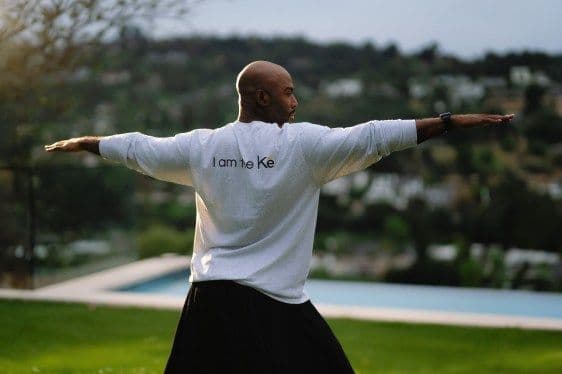
‘Queer Eye’s’ life coach Karamo Brown launches Kē, a wellness app featuring his AI digital clone

‘Queer Eye’s’ life coach Karamo Brown launches Kē, a wellness app featuring his AI digital clone

Karamo Brown, famous for his pep talks on Netflix’s “Queer Eye,” has jumped into the wellness and AI space with his new app,Kē. After spending a year and a half focusing on his own journey—from fitness and nutrition to meditation, sobriety, relationships, and personal growth—Brown wants to help others do the same. Kē offers a slew of features designed to support users, including personalized fitness plans that cater to users’ existing workout equipment and schedules, as well as nutrition guidance by suggesting meal plans based on the food users have at home. Users have the flexibility to request adjustments to their fitness and meal plans through an AI chatbot, making it easy to customize their experience. Plus, each workout is paired with guided instructional videos to ensure correct form. On the mental health front, Kē includes a meditation section with videos targeting various emotions, helping users manage stress and anxiety. There’s also a community section for users to engage in supportive groups focused on shared experiences, such as sobriety or wellness discussions. But what really sets Kē apart is its “AI Karamo” feature that lets users talk with a digital version of Karamo. They can ask questions and get advice in real-time, delivered in his voice. Powered by AI startupDelphi,the clone pulls from all sorts of material from Brown—like interviews, podcast episodes, and other clips—to ensure it represents him as authentically as possible. (Arnold Schwarzenegger also has his own digital clone with Delphi.) “My best friend and sister to this day still talk to the AI clone when they can’t get hold of me,” Brown told TechCrunch. Brown’s new app reflects a bigger trend, where more celebrities are getting on board with AI. For example, stars likeMatthew McConaughey and Michael Cainehave partnered with ElevenLabs to license their voices for digital replicas. However, many celebrities are publicly expressing their concerns andtaking actionagainst the rise of AI, particularly regarding the unauthorized use of their likenesses and voices in creating digital clones. There has also been a bit of concern about fans forming one-sided emotional attachments to celebrity chatbots. Brown emphasizes that Kē isn’t meant to replace real relationships; instead, it’s a tool to aid in personal development and encourage people to reach out for real support when needed. “If someone is struggling with a sensitive issue, it can direct them toward appropriate resources and remind them to seek support from real people in their lives… At the end of the day, this is meant to be a tool that helps people reflect, learn, and grow, and it’s not a substitute for human connection,” Brown said. When asked if there’s a limit on the frequency of interactions with his digital clone, Brown replied, “People can talk to it as much as they need. That said, the goal isn’t to keep users talking to the AI indefinitely. It’s designed to help people make progress in their lives.” He also mentions that there are safeguards in place to keep interactions safe, with a team of humans overseeing the app. (However, users should keep in mind that using the AI feature means they’re sharing their conversation data with Delphi, so it’s smart to avoid disclosing sensitive info.) He adds, “When AI first started becoming part of the conversation a few years ago, I was honestly pretty skeptical. But the technology has evolved significantly, and what changed my perspective was seeing how thoughtfully companies like Delphi have approached it.” In the future, Delphi plans to introduce agentic capabilities to Kē to perform tasks on users’ behalf. For instance, if AI Karamo gives you advice on your workout routine, it may one day be able to go into the “My Plan” tab for you and adjust it immediately. Kē is now available oniOSandAndroiddevices. The subscription costs $14.99/month after the 3-day free trial.

3 hours ago

View

The smartphone era created an attention crisis. Slowtech is fixing it

The smartphone era created an attention crisis. Slowtech is fixing it

When Tony Fadell entered New York City’s 28th Street Subway Station, he did not expect to come face-to-face withan advertisementfor a product he designed over 20 years ago. But there it was: a five-by-four-foot poster promoting the iPod Shuffle, luring passersby with the promise of “Zero screen time.” “The first thing was, I thought, ‘Wait a second, did somebody not change the ad?’” Fadell, known as the father of the iPod, told TechCrunch. “For somebody like me who knows that thing intimately, it’s like seeing your kid’s picture.” As Fadell stood in the train station, he was surrounded by people wearing wireless Bluetooth headphones to stream music on their phones, effortlessly accessing music libraries with over 100 million songs. This technology that we take for granted makes Steve Jobs’ early iPod tagline —“one thousand songs in your pocket”— sound antiquated. The postage-stamp-sized iPod Shuffle, which relied heavily on shuffle playback and offered little control compared to today’s streaming apps, should not appeal to a modern audience. But we have become so entrenched in technology that our various devices, apps, and algorithms mediate our every experience, from grocery shopping to dating. We’ve built smartphones that can do almost anything, but we’ve also created a constant connectedness that has become more exhausting than enriching. “People are very oversaturated and overstimulated, and they really want to have a more mindful approach to what they’re doing with their tech,” Joy Howard, CMO ofBack Market, an online marketplace for refurbished tech, told TechCrunch. “There’s this fatigue that we have with the need to optimize every single aspect of our life.” Howard and her team were responsible for the iPod Shuffle ad that Fadell was so shocked to encounter. But Howard says that demand is growing for this supposedly obsolete tech — if these devices weren’t driving sales, the company wouldn’t have shelled out for a premium ad placement in a hectic New York City subway station. For younger generations who have never known a world without social media and smartphones, there’s a certain magic to wired headphones, retro gaming consoles, CDs, and digital point-and-shoot cameras. They crave experiences that aren’t trying to monopolize their attention. Old-school cameras can’t upload photos to your Instagram story, retro games don’t spam you with gambling ads, and iPods can’t automatically play music that you’re algorithmically destined to enjoy. That’s the whole point of this movement, which Howard calls “slowtech.” “The ‘fast tech’ up until now has been all about eliminating friction… [Now], people are seeing friction as a way to create boundaries for themselves,” Howard said. “It’s so stunning to me that now people are wanting to bring friction back into their lives, and see that as a feature, rather than a flaw.” Around the same time that Fadell first pitched the iPod to Steve Jobs,Austin Murrayfounded JAMDAT, one of thefirst mobile gaming companies, which quickly went public and was sold to Electronic Arts for $680 million. “When we were pitching our company back in 2000, 2001, people were laughing at us, saying, ‘Why would anyone play games on their cell phone?’” Murray told TechCrunch. Now, investors are just as incredulous when he pitches them on hisscreen-time reduction app, MOQA, which he is building to counteract the very phenomenon he helped create. “It’s watching what happened to my kids and the people around me that hurts my soul the most,” Murray said. “When everyone is doing the same thing — meaning everyone, the average screen time is like five hours probably on a phone every day — it’s not a willpower problem. It’s a product design problem.” This desire to cut back on the time we spend using our phones, computers, and TVs has become ubiquitous —about 53%of American adults say they want to reduce their screen time. “At a certain point, I realized that willpower was insufficient to not waste time on my phone,” said writerCalvin Kasulke, whose novel “Several People Are Typing” imagines workers trapped inside a Slack workspace. He now pays forOpalandFreedom, two apps designed to limit his screen time and social media use. “I don’t need to limit my time on iMessage — that’s people who I really know! But I certainly don’t want to be wasting my time doomscrolling.” “I want to be very clear… I don’t feel smug about this. It’s embarrassing to have two different apps to limit how I use this,” Kasulke said. “I don’t think screens are inherently bad. I just think the way I was using [my phone] was worse and dumb, and now it’s a little bit less dumb.” Others have given up their iPhones altogether, opting instead for flip phones,e-ink devicesthat run Android software, or minimalist touch-screen hardware like theLight Phone. “Our customers for the last 10 years are telling us how they feel more free after switching to the Light Phone,” Light co-founder Kaiwei Tang told TechCrunch. “It’s getting more and more attention, especially among young people. We have quite a lot of the community using Light Phone as 20- to 35-year-olds, which surprised us.” Murray isn’t as optimistic about the future of “dumb phones,” though. “There’s certainly a movement of people who are just kind of anti-tech and ‘get it out of our lives,’” he said. “That’s really hard though, because then you realize you can’t do things that are now assuming you have a smartphone, like banking, or going into a hotel, or [using] credit cards.” Kasulke said if Apple ever made an e-ink iPhone, he would “f–ing donate plasma to be able to afford it.” But that’s unlikely, so he’s not particularly interested in downgrading his phone. “I’m not like a, ‘I wish I could throw this thing in the toilet and go live in the woods’ kind of guy,” Kasulke said. “My phone has some utility for my personal and professional life, but it also lives in your pocket, and it is very, very easy, and in fact, designed in some ways to be addictive and to mindlessly waste time on it.” Screen time isn’t universally bad. We’re accumulating screen time when we video chat with our family, text our friends, read news articles, maintain our Duolingo streaks, or play Wordle. But for as much as tech brings us closer to one another, it also yanks us out of the present moment. “It’s clear people want the convenience of digital, but they don’t want the annoyance of being always connected,” Fadell said. “I’ve always been like, ‘We need less screens, not more of them.’ So to have an Apple Watch with everything, like, no, no, no — I don’t want more, I want less.” It’s not surprising that Fadell’s preferences are a bellwether for the market — he’s a veteran product designer, after all. American spending on fitness trackersgrew 88%year-over-year, according to market research firm Circana, which credits screenless wearables like the Oura ring and Whoop wristband as key sales drivers. Even though these devices don’t have screens, you have to use your smartphone to see your data, which would make it even harder for Oura and Whoop users to try out something like the Light Phone. But most consumers aren’t looking to make such an extreme change as pivoting to a flip phone — instead, some are embracing even more sophisticated hardware that relies on their smartphone, but cuts down their overall screen time. Mark, a $159 AI bookmark, advertises itself as a tool to help users stop pulling out their phone to take notes while they’re reading. While some readers might find the idea of an AI bookmark to be symptomatic of the same problem that pushes people toward a digital detox, Mark founder Eason Tang sees it differently. “The way we try to brand it now is this sort of analog tool, very culturally integrated with design, film, books, and literature,” Tang told TechCrunch. We raised $1M dollars to reinvent how people read. Introducing Mark II – a $159 AI bookmark. Thread belowpic.twitter.com/eL0XsyRlgC There’s something undoubtedly absurd about using an AI bookmark to mediate your relationship with your phone, yet there is a bit of truth to Tang’s pitch — when you stop reading to take notes or snap a photo of a key passage on your phone, you’re bound to encounter some other distracting notification that interrupts your reading. Though AI developments are almost synonymous with “fast tech” culture, there’s a clear allure to the promise that AI agents could simplify our lives and give us more time away from screens. “I think that this idea that people want tools to serve them and not to dominate them is very profound,” Howard said. “I think what the ‘slowtech’ movement is about is people pushing back against the constant digital fatigue, distraction, overwhelm, so if you can use AI to do that, to kind of protect yourself… That’s what people want: more control.” The ubiquity of AI turns some consumers off from the latest products, but this isn’t their sole grievance with big tech. People are also disillusioned by these companies for continually bricking perfectly good hardware just to make us buy the latest model. Back Market, for example, rehabsdiscontinued laptopsand resells them with USB keys that can install ChromeOS Flex, which turns supposedly obsolete hardware into functioning Chromebooks. “One of our developers started finding a way to hack things that had their OS sunsetted to bring it new life. And so one of the first things he hacked was a rice cooker,” Howard said. “His rice cooker didn’t have support anymore! This is actually a really cool use of AI — like, vibe coding your own app to keep your hardware alive longer.” While slowtech adherents may not all agree about AI use, the debate is secondary to the bigger problem at play: We’ve created an ecosystem where we are so dependent on smartphones and our various apps that the whims of the tech industry can control how we cook rice. In this reality, it’s no wonder that people are so eager to disconnect that they want to downgrade to an iPod Shuffle. “People just really want to take back control of their time, their lives, their attention,” Howard said. “They’re down for whatever helps them do that.”

3 hours ago

View

Submit your Tool

Submit AI Tools – The ultimate platform to discover, submit, and explore the best AI tools across various categories.

PoweredByAI.app is an AI Tools Directory helping individuals, businesses, and creators discover the best AI tools for writing, coding, design, productivity, and more.

© 2026 , Product of011BQ. All rights reserved.