AI Styling Studio — Infinite avatar looks from just 1 photo.Try it now.

Advertise here →

AI NewsWWDC 2026: Everything announced on Siri AI, iOS 27, Apple Intelligence, and more

WWDC 2026: Everything announced on Siri AI, iOS 27, Apple Intelligence, and more

3:32 AM IST · June 10, 2026
WWDC 2026: Everything announced on Siri AI, iOS 27, Apple Intelligence, and more

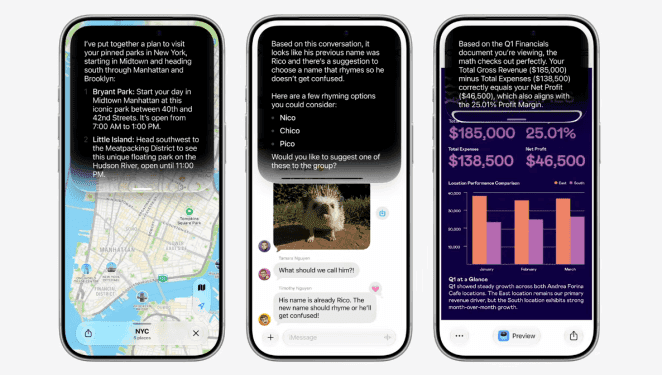
Apple’s WWDC 2026 event kicked off yesterday at Apple Park, starting a week packed with reveals about Siri AI, iOS 27, Apple Intelligence, and more, along with developer events and demos as Apple looks to reassert itself with users and developers who haven’t been impressed with their releases within the wildly competitive AI space. It also marks CEO Tim Cook’s last WWCD with the company, afterannouncing he’s handing things off to Senior Vice President of Hardware Engineering John Ternus on September 1. Did they succeed? Keep tabs on this page, and the rest of our ongoing coverage, to find out! This is far from our consumer news editor Sarah Perez’s first WWDC, and with all that context in mind,she provides the subtext on much of what was being showcased. For the past two years, Apple has been racing to catch up in AI while frustrations with its core software quietly added up: a design overhaul users hated, a search function that barely worked, a file-sharing feature that routinely failed, and a Health app that didn’t focus enough on half its user base. Apple didn’t say any of that on Monday. But the structure of its WWDC keynote said it for them, leading with fixes before features, and framing a better Siri as one item on a long list of improvements rather than the main event. As expected, Apple made the case for an improved experience with its long-standing Siri assistant, which it admitted faces greater expectations from users in the age of AI. With Google Gemini under the hood, Apple claims that the new Siri updates will make it more capable, conversational, and compatible with visual intelligence, and it will behoused in a stand-alone appin addition to working across existing apps.You can get a full rundown of all the new Siri AI updates right here. Before rolling out the enhancements and features, Apple was adamant about its privacy-centric approach to AI. “We believe privacy in AI is non-negotiable,” Apple senior vice president Craig Federighi said during the stream, going so far as to say that “data is only used to execute your request, and outside experts can continue to verify this promise at any time.” No, Apple didn’t make such a big reveal during WWDC, butresearcher @M1Astra dug through files within the iOS 27 developer betaand found references to things like “foldState,” “angleDegrees,” and other things that allude to the states a foldable device can be put into. And it’s not like there hasn’t been a bounty of foldable iPhone rumors over the past few years. Stay tuned for Apple’s annual iPhone event in September to see if we do get a formal reveal, unless Ternus really will be changing things up in the post-Cook era. To go along with its new Siri AI overhaul, the tech giant announced a slew of newApple Intelligence updatesacross its apps, including tab management for Safari, one-tap password updating, cross-app context awareness, and more. Additionally, Messages is getting AI-powered reply suggestions, while the Phone app can now pull context from other apps like Mail and Messages mid-call. Apple said it collaborated with Google and the Gemini family of models to develop the next generation of Apple Foundation Models that power its integrated Apple Intelligence experiences. If you are among those who aren’t exactly keen on last year’s Liquid Glass design updates,you aren’t alone. And while Apple isn’t switching to a new aesthetic,you will be able to dial back some of its elements, or really highlight them if you’re vibing with it.And for the app icon critics out there fresh from Spotify’s disco ball update, Apple showed off a new, layered approach to Liquid Glass within its apps. As is the case every year, a number of small tweaks and updates arriving with the upcoming iOS update didn’t get their time in the sun during Apple’s broadcast, but that doesn’t mean they’re not noteworthy.Ivan Mehta brought together several of them right here, including: The AI image-generating app Image Playground hasn’t exactly taken the world by storm, which depending on your view on AI slop may be a good thing. However, Apple rolled out a renewed pitch for users to actually start generating images, with a focus on its possible uses across many features of your devices, with an exclusion set on any training based on photos generated using the app. That, plus performance updates coming alongside Apple Intelligence upgrades, might at leasttake it out of the “suck” category for TechCrunch senior writer Amanda Silberling. Claiming that its upcoming update will be “available to more users than any iOS release ever,” Apple revealed that all devices from the iPhone 11 onward will be eligible for their upcoming software update. And that update comes with a flurry of performance improvements it’s touting across a number of its OS releases this year, with Apple claiming that new photos will appear 70% more swiftly, AirDrop transfers will be 80% faster, and CPU schedulers will be improved to help multitasking. Apple spent a significant amount of the WWDC event showcasing a suite of tools for parents looking for greater control over what their children’s devices can and can’t do. Parents will be able to determine who their kid can call on the phone and what apps and websites they can access, with Apple making suggestions about how those restrictions can change over time. By default, though, its “Ask to Browse” feature limits access, and “Ask to Buy” for App Store and in-app purchases will be set as a default for devices set up for children younger than 13.You can get more parental control details right here. Frustrated with searching through your iPhone for, well, pretty much anything? Search got a dedicated session during WWDC to tout a series of improvements,which you can learn more about here. “We’ve all had that moment where you search for something you know is there, but it just won’t show up,” Stacey Ford, vice president of OS Program Management said. “So on iOS, iPadOS, and macOS, we’ve rebuilt the foundation of search that powers Spotlight, Photos, and Mail. To take on popular AI photo-editing apps, Apple is bringing new AI features to itsPhotos app. A new spatial “Reframe” feature will let you use AI to adjust the perspective of an image as if you had repositioned the camera in the original scene. The new “Extend” tool expands images to adjust the aspect ratio or add more to a scene. The app’s popular “Cleanup” tool is also getting an upgrade so users can remove distractions with better quality and more realistic infill with generative AI. Apple is launching a newsystemwide dictation experiencethat’s built into the keyboard on iOS 27 and can correct spellings, punctuation, and capitalization. The update comes as AI dictation apps like Wispr Flow and Willow have been gaining popularity. These apps clean up filler words like “ums” and “ahs” and format the text after transcribing based on context. For the first time,developers will be able to partner with each other to provide access to different subscriptions, for a lower bundled price. It’s not an uncommon practice for anyone who’s been pitched by various streaming services searching for subscriber growth, but it’s the first time this is available for things like productivity or photography apps in the App Store. And if a bundled offer isn’t compelling enough, your interests and behavior will power a new means of discovery for developers:personalized recommendations that will appear across several App Store locations. These recommendations will include “App Notes” that detail why they’re appearing among other apps. Apple is using AI to make its visual-scripting tool, Shortcuts, easier to use in iOS 27. Theupdated experiencewill allow users to write a prompt and simply describe what they want to do. The AI update makes the Shortcuts app more approachable and expands what non-technical people can do. Apple’s Health app is addingperimenopause and menopausesupport to its existing cycle-tracking feature. The update embraces a topic that has gone mainstream, giving Apple a new product opportunity in a rapidly expanding market, as digital health tools targeting this demographic have attracted significant investment in recent years. At the end of the keynote, Tim Cook had a farewell message reflecting on his time as CEO: Over the years, you have helped people connect, create, learn, and experience the world in extraordinary new ways, and with the incredible capabilities we introduce today, and so many more still to come, I truly believe the best is still ahead at Apple. Getting the best products in the world to deliver experiences that enrich people’s lives has always been our North Star. It’s been the honor of a lifetime to help advance that mission with teams whose creativity, care, and conviction continue to make a lasting difference in people’s lives. Miss out on WWDC? You can always catch up on the archive of the full event via the stream above oron Apple’s YouTube page right here.

read more

Latest AI News

View All News →
Almost half of U.S. singles feel negatively about AI in dating, Match says

Almost half of U.S. singles feel negatively about AI in dating, Match says

Dating app giant Match Group — which owns apps like Tinder, Hinge, and OkCupid — conducted astudyto determine how U.S. singles really feel about the relationship between AI and dating. Turns out, people don’t want AI messing with every aspect of human life. Across the industry, dating apps are experimenting with AI. Bumble introduced adating assistant named Bee, and Tinder isspendingso much on AI tools that it’s slowed its hiring process. Meanwhile, Hinge’s CEOstepped downlast year to launch a more AI-focused dating app altogether. But according to Match’s survey of 1,000 people aged 18 to 39, 47% of singles have a negative view of AI’s use in romantic contexts. This perspective varies depending on what the AI is being used for. About 40% of singles say they would refuse to date someone who uses an AI companion app, and that figure rises to 51% among women ages 18 to 24. However, only 12% of 18- to 24-year-olds said that they had used a companion app over the last three months, and only about a third of those users said they were seeking genuine connections with those chatbots. While Match says that people harbor a “near-universal” disapproval of actually dating an AI, like in the movie “Her,” that doesn’t mean that respondents are wholly opposed to AI features within apps. Some 64% of respondents said they could see how AI might help them in their dating journey. If we’re being pedantic,technically, every major dating app has already used some form of matching algorithm since before we knew what a GPT was. This survey refers to the new crop of AI features that basically every app is introducing, which help users punch up their profiles, choose photos, and keep conversations flowing. What dating app developers should take away from this survey is that people are not entirely closed off to AI; they just don’t want to be in a relationship with a robot, nor do they want to feel as though their dating experiences are overly inundated with technology that feels inauthentic. “Ask singles what they want from AI in dating, and the answer is pretty consistent: help with the hard parts, but hands off for the human parts,” Match wrote in a blog post. “Yes, they’ll use it to help them punch up a profile or for help figuring out what to say when a conversation goes quiet, but the actual connection is still theirs to create.” Hopefully, this message reaches dating entrepreneurs like Bumble founder Whitney Wolfe Herd, who suggested that dating app users could havepersonal bots that date other users’ bots. It’s pretty normal nowadays to say you met your partner online, but “his bot asked my bot out, and our bots hit it off” will never be a socially acceptable meet-cute.

1 hour ago

View

OpenAI is bringing on some big guns in the lead-up to its IPO

OpenAI is bringing on some big guns in the lead-up to its IPO

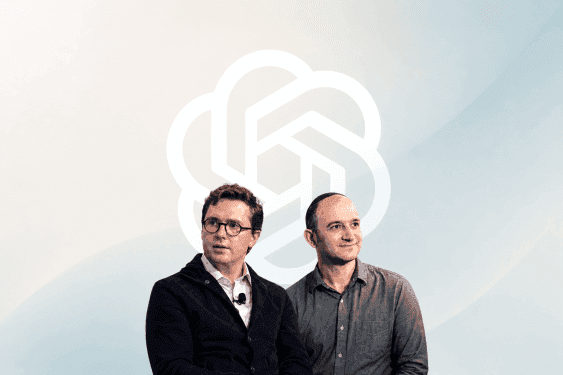
OpenAI is bringing on some big names to the team in the lead-up to its public debut: Google DeepMind AI legend Noam Shazeer and former Trump White House AI policy official Dean Ball. Shazeer, a co-lead at Gemini and the founder of AI role-playing startup Character AI,announced his departure on Wednesday. He had been at Google since 2000, leaving only for a three-year period when he left to co-found Character AI. Two years ago,Google re-hired Shazeerin a $2.7 billion deal that gave the tech giant access to the startup’s technology. The move is the latest in a series of shufflings between the top AI labs, including Google, OpenAI, Anthropic, and Meta. Shazeer is credited for being one of the foundational minds behind modern generative AI. He co-authored the seminal 2017 paper “Attention Is All You Need,” which introduced the Transformer architecture. Before leaving Google, Shazeer had also reportedly been stirring the pot when it came to political issues. According toThe Information,Shazeer voiced opinions on internal messaging boards on transgender identity and Israel’s war in Gaza that resulted in management deleting his posts. Whether those controversies will follow him to his new employer remains to be seen. In the meantime, OpenAI is also shoring up its policy credentials by bringing Ball to the team. Ball had a brief stint last year in the White House, where he helped publish America’s AI Action Plan before stepping down to rejoin the techno-libertarian think tank the Foundation for American Innovation as a senior fellow. “I am pleased and honored to announce that, on July 6, I’ll be joining OpenAI as leader of a new team called Strategic Futures,”Ball wrote on X on Thursday. “Our mandate will be to help the company’s leadership shape frontier AI policy.” Ball will report directly to Chief Strategy Officer Jason Kwon. The “small, high-agency team” will focus on “matters pertaining to: catastrophic risk, recursive self-improvement, labor market impact, and the relationship between the frontier labs, governments (particularly the U.S. Federal Government), and society,” Ball wrote in ablog post. The Strategic Futures team will cover both public-facing policy and internal governance, he added. That last is important — Ball noted that “almost by necessity,” AI labs will have to lead on AI governance decisions. “In other words,internal governancewill be more central to the future of AI than most people realize,” Ball wrote. Ball’s decision to join OpenAI — arguably an AI favorite in the administration — comes as Anthropic battles once again with the U.S. government. Late last week, President Donald Trump ordered anexport control ban on Anthropic’s latest models,Fable 5 and Mythos 5, leading to the AI firm being forced to take the models down entirely to avoid noncompliance. For anyone who had “government interference” on their S-1 risk factor bingo card, Ball is what it looks like when a company locks in its insider status while a rival is squeezed. TechCrunch has reached out to OpenAI for more information.

1 hour ago

View

Snap spins off AI video team into new company, Dotmo, due to costs

Snap spins off AI video team into new company, Dotmo, due to costs

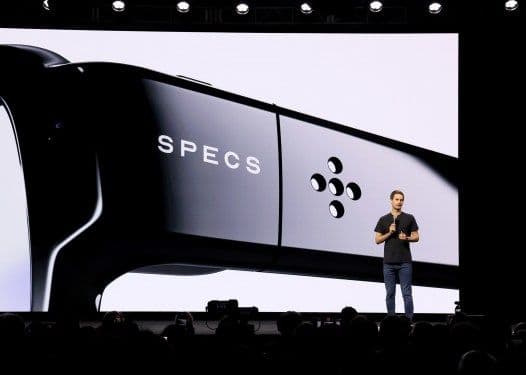
Snap will be spinning off an internal generative AI video team into a separate company. The new company — dubbed Dotmo — will focus on developing AI models that can create interactive gaming experiences, Snap told TechCrunch. Snap cited the high costs of conducting such work internally as one of the reasons for the spinoff. While technically a separate company, Dotmo will retain its close ties to the Snapchat creator. For one thing, Snap will provide Dotmo with a license to adapt its technology for gaming and interactive entertainment platforms. At the same time, the initial Dotmo team will consist of a group of current Snap staff who are leaving Snap to launch the new venture. Additionally, while Dotmo won’t be funded by Snap directly, the company says that Bobby Murphy, its chief technology officer, will act as lead investor and will have a significant personal stake in the new firm. Though a financial backer, Murphy will continue to work for Snap full-time as its CTO and continue to lead its GenAI research and development initiatives. In exchange for the talent and the technology license, Snap will get a large equity stake in Dotmo, the company said — a position that could prove rewarding if the company prospers in the future. Dotmo may also eventually seek outside funding, Snap said. The move marks Snap’s second major spinoff effort this year. Earlier in 2026, Snapspun off Specs into a new companyto focus exclusively on the development of its smart glasses line. (Snap’s recent unveiling of Specswasn’t exactly a home runfor the company. Snap’s stock tanked afterconcerns were raisedabout the hefty price tag attached to the new smart glasses, which is around $2,200.) Snap also underwent a round of layoffs earlier this year, during whichsome 1,000 jobs were cut. Dotmo represents a different kind of spinoff than the Specs operation, in that its team will be focused on developing digital experiences that aren’t currently a part of Snap’s core business priorities, a Snap representative said. However, it could still be considered a partner in the future if the fit seems right, they added. Spin-offs can be a cost savings strategy for companies, although they can serve a variety of other purposes — like showing off a particular asset, generating investor attention, or providing operational flexibility to the team involved. In spinning out Dotmo, Snap may be reducing the financial burden associated with its AI efforts, while still maintaining exposure to any potential upside through its equity stake.

2 hours ago

View

AI inference startup Baseten reportedly raising $1.5B months after its last mega-round

AI inference startup Baseten reportedly raising $1.5B months after its last mega-round

AI inference company Baseten is close to finalizing a stunning $1.5 billion funding round at a $13 billion valuation,the Wall Street Journal reports. Just five months ago, the startup announced that it had raised a$300 million Series Eat a $5 billion valuation. And that round was just nine months after raising a$150 million Series D. If finalized, this latest round would represent a 160% increase in valuation in less than half a year. However, the WSJ reports that this is asplit-priced round, a tactic startups are using to boost their headline valuation and make lead investors look good on paper. Some investors in this latest funding round are reportedly coming in at a $13 billion valuation, while others at $11 billion, sources told the Journal. This deal is said to be co-led by Spark Capital, Sands Capital, Altimeter Capital, and Wellington Management. Launched in 2019, Baseten is a startup benefiting from what The Next Wave hailed the “inference gold rush,” in which VCs are pouring enormous amounts of money into companies building the inference layer. Inference is what the model does after a user submits a prompt. Baseten promises to handle inference quickly while controlling costs by routing requests to the best-for-task model, especially to competent, less-expensive open source alternatives.

2 hours ago

View

Submit your Tool

Submit AI Tools – The ultimate platform to discover, submit, and explore the best AI tools across various categories.

PoweredByAI.app is an AI Tools Directory helping individuals, businesses, and creators discover the best AI tools for writing, coding, design, productivity, and more.

© 2026 , Product of011BQ. All rights reserved.