Latest AI News

Chinese cybercrime operation that used AI to scam ‘hundreds of thousands of victims’ sued by Google
Google is suing to dismantle the infrastructure behind an alleged massive AI-powered cybercrime operation. On Friday, the tech giantannounceda lawsuit against an alleged Chinese cybercrime network called Outsider Enterprise, which Google says uses AI in its campaigns to send scam text messages impersonating Google and other brands to steal passwords and credit card numbers. Outsider Enterprise has financially scammed “hundreds of thousands of victims” with losses “estimated in the millions.” The group deployed 9,000 fake websites, one million fraudulent web domains, and 2.5 million texts sent to Android users in a two-week period, according to Google. The company said, “55,000 spam texts were flagged by Android users in just two weeks this past May — that’s more than two text spam complaints a minute.” Google said it uses “AI-powered tools to fight AI-powered scams,” which enable the company to detect scams and alert users of suspicious calls and text messages, leading to the interception of more than 10 billion scam messages a month. The company said it has been collaborating with AT&T, T-Mobile, and Verizon to block the scam text messages, and said it is coordinating with the FBI. An FBI spokesperson told TechCrunch that the bureau, in coordination with Google and Lumen’s Black Lotus Labs, seized several domains used by the cybercriminals, as well as Shopify storefronts and accounts used to test the operation’s phishing service. The spokesperson said that since July 2023, Outsider Enterprise’s phishing platform enabled cybercriminals to steal “at least an estimated 3,870,000 stolen credit cards and a corresponding estimated $1.9B in losses.” In its complaint filed as part of the lawsuit, Google laid out the evidence it gathered against people involved in the Outsider Enterprise operations, whom the company said are foreign-based cybercriminals whose real identities are unknown. This group “built, maintains, and uses a turn-key, online software suite that enables criminals, regardless of technical skill, to publish fraudulent websites designed to rob victims and enrich themselves,” according to the complaint. Google said this “phishing-for-dummies” software called Outsider, which costs $88 per week or $200 per month, allows operators to create fake websites with the help of AI platforms, including Google’s own Gemini. The fake sites impersonate several services and companies, such as telecom providers, financial institutions, government agencies, and retailers. To lure people to the fake websites, the cybercriminals collaborate with one another to send victims malicious text messages, or purchase ads. The common goal is to steal passwords and corresponding multi-factor codes as well as financial information, which the scammers can do by receiving the data that victims input into the fake websites, with the information being transmitted through Outsider’s platform in real time. “Part of the Outsider software’s appeal is the ease with which someone with limited technical expertise — like many members of the Enterprise— can purchase the software, execute various phishing attacks, and, upon purchase, meet other members of the Enterprise who are proficient in other areas,” Google wrote, referring to Telegram channels where the cybercriminals can collaborate, train each other, discuss strategies, and develop phishing attacks. “The Enterprise brazenly coordinates its efforts in open and largely uncoded discussions on Telegram.” According to Google, the Outsider platform allegedly offers cybercriminals “more than 290 pre-built templates that mimic the legitimate websites” that generate replicas of real websites “in minutes,” along with guides on how to “weaponize AI-generated code,” as well as a dashboard to track progress of phishing campaigns. The cybercriminals have allegedly used Google Drive and Google Cloud infrastructure to host the phishing websites. “The Outsider software has been used to create over a million phishing websites to swindle innocent victims out of millions of dollars,” Google wrote in the complaint. To give an idea of the scale of Outsider Enterprise’s operation, Google said that over a five-month period, from November 14, 2025 to April 14, 2026, the company detected more than 1.59 million URLs connected to it. Google said the Outsider Enterprise operation is made up of several groups of cybercriminals: those who develop and maintain the phishing software and website templates; those who supply lists of targets curated from public records, social media, and data breaches; a “spammer group” that provides toolsand theinfrastructure to send scam texts in bulk, which includes smartphone banks, SIM cards, and modems; and those who monetize the stolen credentials and launder the stolen money. The cybercriminals have stolen “at least 36,000 payment cards issued by financial institutions in 95 countries,” according to Google. The company accused the people behind Outsider Enterprise of impersonating Google and its brands, of infringing its copyright, of racketeering activities, of committing wire fraud, and false advertising. With the lawsuit, Google is seeking compensatory and punitive damages, and an order to stop the criminals from carrying out their activities. This story was originally published at 10:26 a.m. PDT and has since been updated with new information from Google’s complaint, and the FBI’s comment.
View
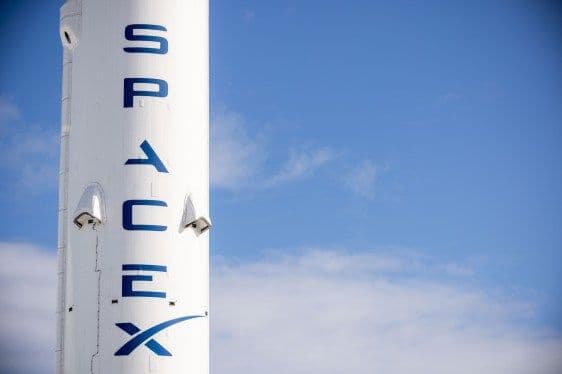
It’s hot IPO summer, and the MANGOS are ripe
The IPO market is back, and it’s not the same companies leading the charge. FAANG had a good run, but anew acronym is taking over: MANGOS— Meta (or Microsoft, depending on who you ask), Anthropic, Nvidia, Google, OpenAI, and SpaceX. Half of that bunch is heading to public markets in the same window, and it’s a stress test for investors, for valuations, and for what we can even expect from a public tech company in 2026. On this episode of TechCrunch’sEquitypodcast, hosts Kirsten Korosec, Anthony Ha, and Sean O’Kane break down what this IPO moment actually means beyond the headline numbers, and who stands to benefit. Listen to the full episode to hear: Subscribe to Equity onYouTube,Apple Podcasts,Overcast,Spotifyand all the casts. You also can follow Equity onXandThreads, at @EquityPod.
View
SpaceX, Anthropic, and OpenAI’s hot IPO summer
Loading the player… The IPO market is back, and it’s not the same companies leading the charge. FAANG had a good run, but anew acronym is taking over: MANGOS— Meta (or Microsoft, depending on who you ask), Anthropic, Nvidia, Google, OpenAI, and SpaceX. Half of that bunch is heading to public markets in the same window, and it’s a stress test for investors, for valuations, and for what we can even expect from a public tech company in 2026. On this episode of TechCrunch’sEquitypodcast, hosts Kirsten Korosec, Anthony Ha, and Sean O’Kane break down what this IPO moment actually means beyond the headline numbers, and who stands to benefit. Subscribe to Equity onYouTube,Apple Podcasts,Overcast,Spotifyand all the casts. You also can follow Equity onXandThreads, at @EquityPod.
View

Mistral is rumored to be raising €3B at €20B valuation
French AI lab Mistral AI is in early discussions to raise about €3 billion ($3.5 billion), BloombergreportedFriday, citing anonymous sources. The funding round would value the company at around €20 billion (about $23.15 billion), nearly double the €11.7 billion valuation itreceivedin a Series C funding round last September. One of Europe’s leading AI startups, Mistral launched in 2023 with the stated ambition to “put frontier AI in the hands of everyone.” The company has taken a more open approach to its AI development compared to its American rivals,offeringsome foundational large language models with open weights, allowing anyone to customize them as they see fit. The company also offers closed models tailored for use cases such as programming, voice cloning and generation, and optical character recognition. Lately, with European countriesdistancingthemselves from American tech, Mistral haspositioneditself as a friendlier, “sovereign” and homegrown alternative. The company is setting upa data center near Parisand has partnered withFrance’s army, thegovernment of Luxembourg, andseveralmajor Europeancompanies. Still, Mistral has only raised about $4 billion to date, per PitchBook, a fraction of what U.S. rivals OpenAI ($186 billion) and Anthropic ($161.25 billion) have taken in. These labs are also valued much, much higher, reflecting how much further American labs have pulled ahead in revenue, model adoption, and enterprise demand. Mistral did not immediately return a request for comment.
View

Pine Labs Launches P3P Agentic Payment Protocol for Autonomous UPI Transactions in India
The Pine Labs Payment Protocol (P3P) was launched in India on Thursday. The financial technology company said that it is a new payment infrastructure that enables AI agents to autonomously complete UPI transactions. P3P is claimed to eliminate the need for manual authentication during payments. It is built upon the existing UPI mandate framework. As per the company, users can authorise spending rules once and let AI agents execute purchases on their behalf.
View

SpaceX IPO: Everything you need to know
SpaceX has captured the attention of media, investors, and the public for years now — interest propelled by the company’s reusable rocket launches, the rise of its Starlink satellite network, and of course, for its founder and CEO Elon Musk. But in its 24-year history, nothing quite compares to this initial public offering. Everyone seems to be interested, and perhaps it’s because of the sheer size of this IPO. The company priced its 555.6 million shares at $135 each to raise $75 billio, making it the largest IPO in history. At this price, the deal also looks set to make Musk the world’s first trillionaire. TechCrunch has followed SpaceX’s start, struggles, and successes from the early days. And we’re here for what happens next too. This article will be continually updated with all of the latest SpaceX IPO news. With an offering this large, there is a lot of financial machinery operating behind the scenes — so the first question is just when the stock makes it to the market to start trading. SpaceX is debuting on NASDAQ and you can see the official NASDAQ listinghere, which will have the price of record as soon as there is one. NASDAQ also has video of the SpaceX crewringing the bell, if that’s your thing. But the price is just part of the picture. For the most up-to-the-minute information, your best bet is still financial press outlets likeBloombergandCNBC, both of which have liveblogs running and will have close coverage of anything hiccups that happen in getting the stock to market. Here we look at some of the bigger numbers, the consequential figures, and the eyewatering amounts that make up the company’s S-1 form. For instance, SpaceX lost $4.9 billion on revenues of over $18 billion in 2025. That’s only a fraction of the more than $37 billion lost since SpaceX’s inception. As CEO, Elon Musk holds about 85.1% of the company’s voting power. You can read more about that in the next section “Who wins and who doesn’t” — and we’ll continue to drop interesting numbers in here. Here is another figure that caught our attention… 4,400. That’s the number of SpaceX employees who could become millionaires,according to the NYT. Elon Musk can’t hear you over the sound of his $1.75 trillion IPO: The Equity podcast weighs in on the IPO SpaceX is the world’s largest IPO in history and means a big payday for some investors, employees, and of course, Elon Musk.How Elon Musk will increase his power through the SpaceX IPO: Musk, who will have more than 50% of the voting power, will have a monarchical grip over the publicly-traded version of SpaceX — control that goes far beyond what other tech founders enjoy. Who will benefit most from SpaceX IPO? Mostly Elon — and a few from his inner circle: Elon Musk has the largest stake in SpaceX by billions of shares, but others also stand to win. Here’s the rundown of who owns what. SpaceX SPV investors won’t know their true holdings until post-IPO lock-ups lift: After SpaceX makes its public debut, lower-tier SPV investors face hidden fees, lengthy payout delays, and the risk of outright fraud. The S-1 registration documentgave the world an unprecedented look inside SpaceX, including its financials and its various businesses. The S-1 continued to be amended as the IPO date approached, and we were on it. Here is what we found. The SpaceX IPO filing is filled with AI bets, Starship dreams, and Elon Musk at the center:The contents of the SpaceX IPO details a business dominated by its Starlink satellite internet offering, more than $37 billion in losses, and future business prospects through its xAI division. Starship’s path to reusability looks murky after SpaceX’s S-1: SpaceX’s IPO and Starship rocket test flight delivered two big data points that offer a realistic vision for the coming years — and one that may disappoint both the company’s boosters and its critics. SpaceX warns investors of future dilution, adding fuel to Tesla merger rumors: The company added new language to its S-1, a warning to prospective investors that a major dilution could be in the cards after it goes public. Leading up to the IPO, SpaceX locked in a string of deals, mostly selling off compute to improve its balance sheet. Anthropic will pay xAI $1.25B per month for compute: Initial coverage of the Anthropic deal on May 20. How long is Anthropic’s lease with SpaceX? Opinions vary:Elon Musk keeps downplaying the duration of SpaceX’s contract with Anthropic. Google will pay SpaceX $920M per month for compute: A Google representative described the deal as a short term deal addressing unexpected demand for its recently launched AI products.
View

EXL Claims 94% AI Deployment Success as Enterprises Move Beyond Pilots
Executive Vice President Madhavi Dahanukar says workflow integration determines AI outcomes over experimentation.
View

Construction is Slow to Embrace Automation. Flo Mobility Wants to Change That
Founded in 2021, the startup pivoted from retrofit kits to developing fully integrated robots designed for rugged terrain.
View
Infosys Partners with CMMI Institute to Develop AI Maturity Framework for Enterprises
Infosys has become among the first organisations to complete its pilot assessment on the CMMI Institute’s framework.
View

Karnataka to Establish 50 AI Labs in Govt Colleges to Boost Future-Ready Skills
Under the IndiaAI Mission, each laboratory will receive financial assistance of ₹68.98 lakh over three years, disbursed in three instalments
View

In 2016, PM Modi Saw an AI Demo. 10 Years Later, Its Creator Says India Still Doesn’t Get AI
Prof Rajeev Sangal says while the country has demonstrated it can build at scale, it is still struggling to decide what exactly it wants to build.
View

OpenAI Said to Be Considering Lower Token Pricing Amidst Growing Rivalry With Anthropic
OpenAI might be considering significantly reducing the prices it charges customers for using its AI models, according to a report. The ChatGPT maker is said to be evaluating a strategy where it may slash its token pricing, which is the usage-based metric commonly used by AI companies to bill customers. The move is reportedly driven by the company's intensifying rivalry with Anthropic, which has also been rumoured to lower its prices in the future.
View